
Review by: Drizzt
This is one the most addicting games out, not only for DS, but it can match and beat many other games out there. With a whole load of stuff to do, it's hard to get bored of this game. Welcome to Animal Crossing: Wild World.
Gameplay is all about fishing, bug catching, finding dinosaur fossils, furnishing your house, expanding your house, making loads of money, going online and hanging it with your friends, making friends with the neighbors, designing your own clothes, flags, umbrellas, your house's flooring and wallpaper and even decorating the town with your own designs. There's always something to do here and it’s all easy to control. Stylus control is as easy as tapping on things. You tap the ground to move. You tap yourself to use whatever item your carrying, tap villagers to talk to them, and so on. You can also just use the d-pad to move around and the buttons to do everything else.
There are special events that come from time to time such as the fishing tourney and “yay day”. There are also many different people that come that need your help, sell you something (such as insurance) and people who want something to eat. Wild World keeps you coming back with lots of new activities everyday and new people to meet. It can get repetitive after a while (a long while) but it still somehow wants you to come back and see what's new. Wild World has an undeniable charm.
The graphics are well done. They are quite fitting for the DS. It shows some of the power the DS can do although nothing to spectacular. It's fairly simplistic and has a humurous art style. Some things are 2D and most 3D and it mixes quite well. Character models are nice. Again nothing mind blowing but the art style is where it shines.
The music and sound is also quite fitting. Get music from K.K. Slider or Totokeke (whichever one you call him) and play it at your own house to listen to anytime free of charge. His songs aren't exactly the greatest but it's a lot better than having a large house with no sound except your awkward footsteps. The animals talk in their "Animalese" language which is quite a load of gibberish and can get a bit annoying at times. If you listen close enough, they are saying the letters of each word really fast making it sound like the actual word but it's rather odd. You can change how they talk to you so it's pretty customizable. The music is nice and changes every hour. Simplistic as they are they are still nice to listen to.
All in all, it's a very fun game with lots to do and lots to see. The Wi-Fi component can feel limited at times but it's nothing big and it's one of the stronger points of the game. Online trading is quite fun and you can really get some cool stuff. There are lots of websites that allow you to share friend codes and go to each others town to trade and socialize. There are very few people that enjoy ruining other towns. I have not encountered one yet and even if you don't like what someone did to your town, you can power off while the other person is still there, kicking the person out, not saving any changes and best of all, that darn mole, Resetti, won't show up to lecture you. But people do indeed hack. Many have insane amount of money lying around, several town gates, and so on.
I recommend this game to anyone looking for some non-violent fun that’s packed with things to do.
Nintendo DS Review: Animal Crossing: Wild World
Tuesday, July 8, 2008Nintendo DS Review: Sonic Rush Adventure
Thursday, July 3, 2008

Review by: Drizzt
A few years ago, in 2005, Sonic Rush came into existence. Developed by Dimps, it proved that Sonic was faster than ever and had some new tricks up his sleeve. Two years later, Sega and Dimps release Sonic Rush Adventure. Of course, it was the "Adventure" part that most fans and gamers were hesitant about. Their fears were proven empty and the adventure portion provides good pacing and a nice amount of 3D fun.
The presentation of the game is very well done. It starts you off watching a high quality cut-scene where Sonic and Tails, in a plane, are getting swept away by a large storm over the sea. They wind up waking up on a beach where a character named Marine shows up and helps them (sort of). A rather different character, Marine speaks with an Australian style dialect, which is also rather stereotypical. She's also the most annoying character in the game. Obviously, her intended role was for comedy relief but unfortunately, it clearly didn't work as she turns out to be mostly a nuisance. Dialogue and character speech is handled through text and 2D art animations. It's not anything really special, but it gets the job done and progresses the story nicely. Occasionally, when something exciting is happening in the story, instead of the text boxes, stylish 3D cut-scenes are used and are very well done. Although there isn't any voice acting during these parts, text serves well enough. Unfortunately, there are very few of these cut-scenes. Overall, the presentation is very stylish and well made by Dimp and Sega.
It's even got a stylish menu!
The meat of the game is in the action stages. The gameplay here is high octane speed with some platforming mixed in. Although the platforming isn't quite prominent until the later levels, the Sonic Rush series, as can be derived from the name, focuses more on speed. This is not a bad thing, however. It's a lot more stylish this way and if your platforming needs aren't satisfied, play the missions! The second part of the game is the sea travel stages. These are surprisingly well done and a lot of fun to play. The first sea vehicle you get is the water bike. This is built for speed but it can't travel very far. You also later get a ship, hovercraft, and submarine. Each of these play rather differently. These sea travel levels are controlled by the stylus. For example, the water bike must be maneuvered by the stylus. The ship and submarine move for you while you shoot enemies and coins and the hovercraft is similar to the water bike, except you can shoot. These levels really nicely pace the game so that you don't get tired of the actions stages. Plus, by creating these sea travel levels, you can travel to different islands to progress the story. Since there is a fair sized map, there are also several hidden islands which you can find. This increases the replayability of the game overall. Along the story, you face different bosses. These boss battles are all epic and completely 3D. They are very well done and the difficulty for them feels just right. The game overall, though, has a great learning curve that starts off as it should: with a tutorial. As you progress, the levels increase in difficulty and so do the bosses.
There are additional modes that you should want in a Sonic game. These modes include time trail mode, mission mode, online racing and battling, as well as local wireless multiplayer. These modes can be a lot of fun and they're all done very well. The time trail mode has it's own online leaderboards so you can compare yourself to players all around the world. Online mode has a nice ranking and points system as well. Local wireless is both single card and multicard play so even if your friend doesn't have a copy of the game, you can still enjoy the full multiplayer experience. There are also 100 extra missions you can do to unlock many new things that not only increase the replayability, but can further expand on the story. These missions can range from passing through flags in the proper order on a snowboard, collecting 100 rings in the time limit, or doing a certain amount of tricks in the time limit. These missions can unlock several extras such as music in sound test or give you medals.
Sea levels provide great pacing to the game
The graphics are also very well done. The 3D models look clean and polished and the environments blend in with everything without a hitch in the frame rate. Everything goes together smoothly and it just feels right. The backgrounds consist in creating a nice environmental theme for each level and each level contains different hazards that suit them rather nicely. The audio is great too. Although there are some songs you can question in their quality, others are great and the game has a great original soundtrack. Some songs that stand out are the Blizzard Peaks songs and the interesting boss battle theme. Sound effects are also exceptional. Voice acting for both Sonic and Blaze is well done and their sound effects for running and jumping are reminiscent of their Sega Genesis predecessors.
Sonic and Blaze both play fairly differently
Overall, Sonic Rush Adventure proves to be a reminder as to how great Sonic can be and how fast he can go. Action stages are well done in providing a great sensation of speed while the sea travel stages provide good pacing to the game and are a lot of fun to play. The graphics and sounds are all great and make proper use of the DS's capabilities. Multiplayer and time trail modes also make full use of the DS's capabilities with leaderboards and rankings. In the end, Sonic Rush Adventure is one of the best platformers for the DS and a fine game overall.
Wii Review: Battalion Wars 2
Tuesday, July 1, 2008
Review by: Drizzt
Battalion Wars 2 (BWii for short) is a war game that has a sort of rock paper’s scissors style combat. It’s a series spinoff from the acclaimed Advance Wars series which are known for their deep tactical strategy and challenging difficulty. While Battalion Wars 2 isn’t as hard or as deep, it’s still a great game that’s fairly engaging.
The games presentation and how it all starts off is very well done. It’s a prologue mission which takes place a few hundred years before the game’s actual storyline. It’s also a tutorial mission and it makes it very easy to learn the game’s basic controls. The overall game’s learning curve is almost non-existent because of helpful tutorials that show up when a new unit with unique controls appears, such as a fighter jet.
Once the first campaign is complete (which takes less than an hour to beat), you’re pretty much into the meat of the game where all the action takes place. The other five campaigns are lengthier, and more difficult than the first one. The campaign overall is noticeably improved from its Gamecube predecessor but it’s also a bit easier. The stylistic charm of the game, fortunately, remains intact in this sequel and the storyline continues from the previous game. If you haven’t played Battalion Wars 1, don’t sweat it. The story itself isn’t very complex and, although you may wonder who a few people are, you’ll pick it up in no time. The story, though, isn’t very special but it is engaging enough to keep you playing. The funny characters and dialogue are all well done and memorable enough.
One difference from BWii and Battalion Wars 1 is that, in the first one, you were constricted to using one empire. In BWii, you are able to play using several empires that each have their own unique units, but in the end, they all still play pretty much the same.
New units such as the Battleship are a lot of fun to use.
Control-wise, it’s all well done and easy to use. There’s nothing overly complicated about the controls so there’s nothing you’ll have much trouble with. You use the Wii remote to point and aim, the B button to fire, the nunchuk to move, the Z button to lock on, and the A button to change unit commands. The only motion sensitive controls there are relate to the nunchuk. For grunts and footsoldiers, you can tilt the control stick to one side and motion with the nunchuk towards the same side to perform a combat roll. You can also flick the remote upward, when you’re not tilting the control stick to the side, to jump. It’s easy enough to learn and in no time, it’ll become pretty much second nature. The C button changes the camera to three different zoom settings which can help out when you’re controlling a large tank or battleship that takes up most of the camera space. As for the 1 and 2 buttons, they are only usable in online mode. They are used for very simple communications with your online partner. The 1 button generally asks for help or requests and the 2 button is basically just acknowledging the request. This feature can sometimes be useful but in the end, it could have been done without. It would have been better if these buttons were used for deeper unit control. The ability to command units “go to” an area and stay there has been taken out from BWii but was present in its prequel.
Combat is done easily by pressing the B button to fire your weapons. The Z-lock on is very helpful and allows you to command your troops to interact with a lot of things. Enemies can be attacked by ordering your troops which is done by locking to the enemy, pressing the A button on whichever troops you choose, and taking part in, or watching, your enemy fall. Certain troops are effective against other certain troops so this makes a rock-paper-scissors combat. Anti-air troops are used against, you guessed it, aerial units. Bazooka vets are used against tanks and enemy armoured units. Grunts and Flame Vets are best used against footsoldiers like Bazooka Vets and other Grunts. There are several other units you can use that all come into play with this rock-paper-scissors combat.
The AI is well done, the missions are a proper length so you have to conserve your troops (the majority of the game's strategy is on that), and you get higher ranks for how quickly the mission was cleared, how many troops of yours remained , and how many troops destroyed, S being the highest rank.
While it might sound strategic, it's the overall combat that's not very complex. It's a rock-paper-scissors sort of combat and it's restricted, meaning you can't tell your troops several commands. For example, there's no retreat command so you have to get your troops to follow you and you have to run away with them which is inconvenient if you want only a certain squad to retreat. Also, you can't give orders for certain troops to "go to" a position like you could in the first Battalion Wars. This could have made moving and commanding your battalion a lot easier and more strategic. Instead, it's a bit unnecessarily hectic and slow, especially in the heat of a battle, trying to get troops to follow you to a certain place and then telling them to stop there.
Aerial units are also fun to use!
Objectives in campaign mode usually require you to capture a flag or destroy something. Capturing a flag can only be done with footsoldiers so make sure they don’t get killed. It’s simple on how you order your troops to capture a flag and it’s the same as ordering them to attack an enemy. You simply lock on to the flag with the Z button and you command your troops you capture the flag with the A button. Simple enough. You can also help to capture the flag by going up to it and flicking the nunchuk (the same way you jump). The maximum number of troops that can capture one flag is five or so. The more units you have capturing the flag, the faster it will go.
Multiplayer is fairly well done and is among one of the better done jobs of Nintendo’s limited online service and yes, friend codes are used. It’s not really a big deal though. You are also able to play with anybody which is similar to other online games such as Mario Strikers Charged which lets Nintendo pair you up with someone looking for a game to play. But in BWii, it’s noticeably more accessible in a way. There are three types of modes you are able to play online. Skirmish, Assault, and Co-op. You are able to choose one of these modes to play and you are also able to choose a map you want to play on as well as your empire of choice. Then, Nintendo pairs you up with someone wanting to play the same game as you. If you don’t care for choosing a map, you can pick the “any” choice. If you also don’t feel like choosing between these three modes, you can also use the “any” choice which chooses a random mode with a random map. One thing is also assured with online: there’s practically no lag. Everything runs smoothly and reacts fluidly.
Graphics are also a step up from Battalion Wars 1. Lighting and Bloom effects are more noticeable and it’s been smoothed out as well. There’s rarely a frame rate drop and it all flows together. Textures and environments are a bit drab and some parts look rough and washed out but that’s all made up for by the vibrant colours and smooth character models.
The graphics look smooth and clean. The explosions look real nice.
Audio sounds as it should. Since the game is a light-hearted game with more of a cartoon-like artstyle, it just sounds, like I said, as it should. The Wii-mote speaker also works well and provides some nice reloading and shooting sounds that don’t sound bad at all unless you turn up the volume. The soldiers chatter is amusing and gunfire, explosions, and all that sort of stuff sound great. The dialogue and voice acting in the game fits the games style and, while some might find it a tad annoying, it’s done properly.
Overall, Battalion Wars 2 is a great war game with a healthy difficulty, a great campaign, and fun multiplayer. It radiates with charm and is loaded with style. I give Battalion Wars 2 an 8/10.
Wii Review: Metroid Prime 3: Corruption

Review by: Drizzt
The Metroid Prime trilogy is a first person adventure (FPA) series that deals with exploration and puzzle solving as well as combat. Some have classified the game as straight First Person Shooter (FPS) but it's really so much more.
Metroid Prime 3: Corruption is the third and final entry into the Metroid Prime Trilogy and it's no disappointment. It starts off with a short but cinematic opening showing...what's this? Dark Samus? Correct. Dark Samus is back and causing more havoc and problems then ever. The game takes you behind the visor of bounty hunter Samus Aran in her familiar space ship and soon enough it leads you through a tutorial level of sorts although it's part of the story.
The game's learning curve is extremely well done. By the end of the first area, you'll be completely comfortable with all the controls. This first area has two boss fights. The first one is with the colossal arch-rival Ridley. He ambushes you and you both fall through a very long tunnel. Your aerial distance with the ground is shown at the top of the screen and you must defeat Ridley before you go splat. The other one is a challenging and epic fight as usual of each Metroid game.
The last thing Metroid games fail at are epic boss fights.
This time around though, Samus isn't the only bounty hunter. Three other hunters are put up with the same task as you are. They act as friends and protect you and help you several times. There's Rundas, Gandrayda, and Ghor. These three hunters each have a special ability. Rundas is able to ride on ice in mid-air and summon ice attacks, Gandrayda is able to turn shapeshift to appear as someone else, and Ghor is just large and powerful. It may sound like you're able to control these three, but you can't.
This all seems a bit different than the other two Metroid Prime's. They both put you on an isolated planet and immerse you into a world that's fairly eerie. Metroid Prime 3 starts off differently but still stays true to the series. After the first area, you are sent to a planet where you must stop corruption from a large space object called a Leviathon that crashed into this planet. Your mission as Samus is to stop this corruption and learn the secrets behind it all. The plot is very well done and is not confusing at all.
The controls are one of the key points of this game. Your Wii remote acts as Samus' arm cannon. All you do is point at the screen (sensor bar really) and look around. You move by using the nunchuk control stick and you fire with the A button located at the top of the Wii remote. The B button at the back allows you to jump, the Z button on the nunchuk allow you to lock on to targets, and the C button also on the nunchuk lets you turn into the morph ball. Once you get the grapple hook, you are able to flick the nunchuk and use it to, for example, rip enemies shields off. This is quite useful and is also used for puzzle solving as well.
It's all very simple. And as you progress, you gain the ability to go into Hyper mode. You just hold the plus (+) button on the Wii remote and you are now in hypermode. This mode allows you to deal heavy damage to enemies but at a price. It requires a full tank of health to activate but how much of this tank you use is up to how much you fire.
Things getting a bit too crazy for you? Go Hypermode and finish the job!
Metroid games in general are noted for their epic and difficult boss fights. Metroid Prime 3 is no exception. The only difference is that there is a lot more boss fights (some of them are mini bosses). You'll fight giant monsters and creatures that aren't all about blasting away at them. Most of them require you to think about what to do and how to do it.
The audio part of this game is on-par with the rest of fabulous quality of this game. Some great tunes immerse you into the worlds you're wandering through and some more upbeat tunes are played when in combat with a room of enemies or a boss of some sort. The sounds like shooting or grapple beam use sound as it should, which is futuristic and sci-fi'ish. It's very well done.
After you have completed the game, you are rewarded with the ability to replay the game but on a new difficulty setting: Hyper mode. Obviously this mode is much more difficult which means enemies are stronger, take longer to kill, and hyper mode itself must be used much more often then in the other two difficulty settings. Expect to die a lot more in this setting.
During the course of the adventure, you are awarded tokens for completing special events or tasks. This is similar to Microsoft's "achievement system". There are 4 different types of tokens and each are earned differently. One type of token can be earned by defeating boss monsters (mini bosses included) on different difficulty settings. So if you beat the game once on, say, normal difficulty, you cannot earn this type of token anymore. You must switch to hard or hyper mode. The second type of token is awarded for clearing special events. These vary and are hard to explain. You can also get this type of token by scanning lore across the worlds.
The third type of token is earned by scanning items and enemies.
The fourth type of token is earned by receiving it from friends via Wiiconnect24. You can also send "friend vouchers" as they are called to friends and when they reach your friends system, they are converted in tokens.
So what exactly do these tokens do? You can use them to purchase extra content such as artwork, music, and cool things like the screen shot taker. This allows you to take screen shots during the game by simply pressing the up button the D-pad. These get posted onto your Wii message board and you can then send these to friends and share epic moments you had.
Visuals in Metroid Prime 3 are quite frankly, amazing. Textures are smooth and well done, frame rate never dips, and the art style of this game is unbelievable. The main improvement though from the other two Metroid Primes on the Gamecube is the lighting and bloom effect. It must be seen to get the full effect. Metroid Prime 3 looks great but it's not the graphical difference that it should be from the first two Metroid Primes.
Beautiful. True art.
Also a problem is the door loading. Metroid Prime games are known to not have any loading screens. The first two Metroid Primes disguised their loading screens with doors. When you shoot doors to open them, it takes a moment to load the next area and it was never a major problem as it went quick and about 95% of the time was never noticeable. Unfortunately Metroid Prime 3 has some bad door loading times. It can take up to 10 seconds for a door to open. This is especially annoying when being shot at so you can't always make a quick escape. This game does have loading screens although they don't say "Loading" or show any progress bar. Instead it shows a short clip of, for example, your ship entering into a planets atmosphere. These disguised load screens are really no problem unlike the door loading times.
There's a lot to see in Metroid Prime 3: Corruption. It might be familiar to some but it really isn't a problem. Overall, Metroid Prime 3 is a great game with lots of action, ingenious puzzles, and a great story and cinematic scenes to boot. Highly recommended worth getting.
Overall this is an incredible game with only a few minor flaws.
The "Sonic the Hedgehog" History
Thursday, June 26, 2008
Written by Drizzt
On June 23rd Sega's blue mascot turned 17. In that time, Sega's creation has gone through a lot of ups and downs (and loop-de-loops.) He's rivaled Mario and runs crazy fast. Since it's Sonic's birthday, I thought I'd run through a traditional Sonic history:
Sonic the Hedgehog: A history
Sonic, after his creation, starred in his first game, appropriately titled Sonic the Hedgehog in 1991 on the Sega Genesis.The gameplay was relatively simple. Dash and platform through each level and then hit Dr. Robotnik in his odd egg shaped machines until he blows up and flies away.

The gameplay was meant to rival Mario, which it did. Sega wanted to create a character that was stronger, edgier, and faster. Much faster. From there, the point of speed became the central idea of the Sonic games.
This game was also available on the Sega Master System and Sega Game Gear.
A year later, Sonic starred in his second adventure, Sonic the Hedgehog 2. This game provided some smaller additions such as smoother scrolling and graphics.

In 1993, Sonic became an arcade game called SegaSonic! Unfortunately SegaSonic didn't do very well because of poor distribution, so not many people got to play it even though it was a fairly fun game.
After that, though, Sega got serious and created what is arguably the best Sonic game: Sonic CD for the Sega CD. Time travel was featured in this game. Sonic ran so fast that he could warp to the past and future. Things he did in each era affected the other. For example, if he went to the past and destroyed some bad guys, their would be a lot less of them in the present.

Sonic CD also featured videos and a great soundtrack because it was on a CD, which provided more space.
After Sonic CD came an exclusive Sonic game to the Sega Game Gear called Sonic Chaos. It featured both Sonic and Tails as playable characters and showed that the Game Gear was a great handheld.
After that came a game that dropped in quality and was a shock to Sonic and Sega fans. Sonic Spinball was basically pin ball, except Sonic was the ball. There was nothing special to the game and it was easily forgettable.
Sega fixed this mistake in 1994 by releasing Sonic the Hedgehog 3. This game was more complex than previous Sonic adventures. It was more puzzle based and featured several hidden areas and more platforming.
Speed was still there but the levels in the game were much larger and so platforming and puzzles found it's way into the game which made an essential balance needed in the Sonic formula.
Sonic and Knuckles, which was released not too long after, further added to the gameplay of Sonic 3.
You were able to lock into the past Sonic games and be able to use Knuckles in brand new stages.When locked into Sonic 3, collecting the Super Chaos Emeralds became possible. Super Sonic and Super Knuckles turned into Hyper Sonic and Hyper Knuckles. Fans were highly pleased with this entry which expanded upon the past Sonic games.
Soon after, a game called Sonic Triple Trouble was released and, as fun as it was, was really just more of the same. Fans enjoyed it and overall, it was great but it didn't put anything new into the formula so it became another Sonic game.
1995 was a questionable year for Sonic. He was put into Sonic Labyrinth and Sonic Drift 2 (the first was only in Japan), which were both disappointing. Fans were left unimpressed and continued to wait for the next big Sonic game.
Moving into 1996, Sonic seemed to be truly dropping in quality. He starred in Sonic 3D Blast and Sonic the Fighters (an arcade fighting game). These were both interesting games that tried new things, but in the end failed.
In 1997, Sega made a compilation of Sonic games called Sonic Jam. Apart from featuring the Genesis Sonic games, this game also featured a sort of prototype of a 3D Sonic game called Sonic World. It wasn't really an actual game, but it contained some secrets you could unlock and use in the actual games. It also had some extra features like a museum, which contained some neat artwork.
In the same year, Sega also made Sonic R which was just Sonic racing. It was very short and it was strictly a racing game. Not entirely memorable either. Fans were still waiting for the next Sonic adventure
And Sonic Adventure was exactly what they got. In 1999, Sonic transitioned into the 3D world in Sonic Adventure for the Sega Dreamcast.

It brought along the speed from the previous 2D Sonic games as well some great platforming. Unfortunately, it brought some unwanted things. Things such as extra characters that were incredibly boring to play as (Big the Cat). Fans questioned Sega and Sonic Teams decision to put such characters into the game. Even so, Chao breeding became a favourite minigame feature and overall, Sonic Adventure was a blast. Fans were pleased.
Now that Sonic had transitioned into 3D, that didn't mean his 2D days were done. In the same year, Sega released Sonic Pocket Adventure for the NeoGeo Pocket Colour. It was still the great brand of Sonic speed that offered the best graphics for a 2D Sonic at the time.

Sonic Adventure 2 soon spawned and introduced a new rival of Sonic's: Shadow the Hedgehog.
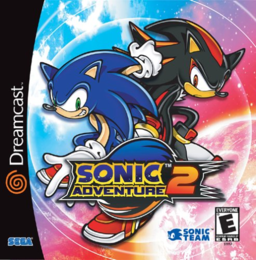
Sonic Adventure 2 also introduced a two player mode where players have a shoot out of sorts and hunt for emeralds. It featured similar level design to Sonic Adventure and provided several extra features.
Soon after the Dreamcast was shut down by the PS2, Sonic Team went to work on Sonic Heroes, a new Sonic adventure that would focus on team exploration.

In the end, it didn't quite work out as planned. It wasn't altogether too fast, had a bad framerate, and graphical issues hampered it down.
Sonic the Hedgehog, a game for the Xbox 360 and PS3, was soon brought into production. Overall, the criticism it recieved was terrible and it's known as the game that truly tarnished Sonic's name because it promised to raise Sonic to a new level and bring some great speed changes.

Unfortunately, this was not to be. It had too many graphical and technical issues and, overall, was negatively received by fans who felt frustrated at Sega. They lost faith in Sonic Team.
Not too long after though, Sonic Team made Sonic and the Secret Rings for the Wii. While fixing problems from previous Sonic 3D games (mainly the camera), it also made some new, but fixable, problems: problems in controls (minor), and problems in level design.

Featuring fast, arcade action, Sonic and the Secret Rings was successful in recreating speed for the series in 3D again. It's also touted as a "step in the right direction" by many.
*There are several other games I didn't list, both good and bad. I didn't mention such as Sonic Rush/Adventure, Shadow the Hedgehog, Sonic Riders, etc.
What does Sonic hold for us in the future?
So far we have 2 major games being looked forward to: Sonic Chronicles and Sonic Unleashed. Sonic Unleashed is looking very promising that looks reminiscent of Sonic and the Secret Rings and the 2D Sonics, namely Sonic Rush.

While I can't predict the future, it seems like Sonic will continue to run in, no doubt, many games to come.


 Posts

